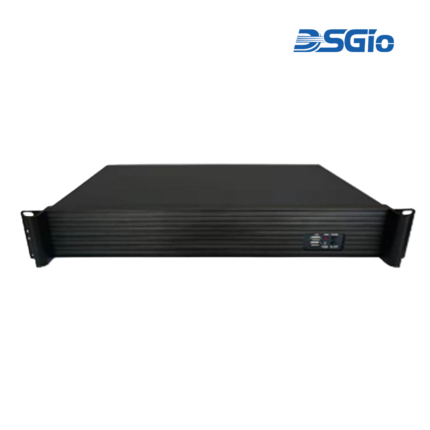



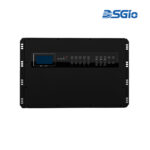





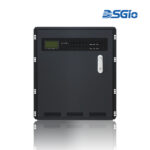
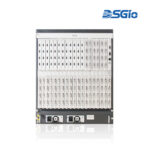
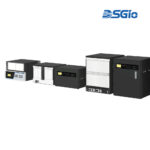

36 Slots VW Processor Chassis
| Brand | DSGIO |
|---|
Part number: SC-36 or SC-36R
The solution is designed to address the challenges faced by high-density, fine-pitch LED displays, such as ultra-high-resolution acquisition, multi-screen display, real-time synchronization, and customizable output resolution. It supports high-resolution video inputs (VGA, DVI, HDMI, DP, etc) and adjust video signals based on user-defined parameters, including window size, display position, and display ratio. The solution enables simultaneous multi-window dynamic display, seamless switching, crystal clear imaging, and pixel-level synchronized transmission.
1. Adopting advanced hardware processing structure and no operating system, it completely eliminates IT virus intrusion and hacker attacks. One fiber optic KVM integrated seat management host chassis is configured to meet a total port count of ≥ 288 ports, with a single device integrated design. It has KVM management function, video switching function, splicing function, and comprehensive audio and video control function.
2. Adopting a non switch closed-loop all fiber engine architecture and non TCP/IP protocol, it does not require the use of existing network resources. It carries and manages video, audio, and control information through dedicated physical fiber channels, ensuring high security and confidentiality.
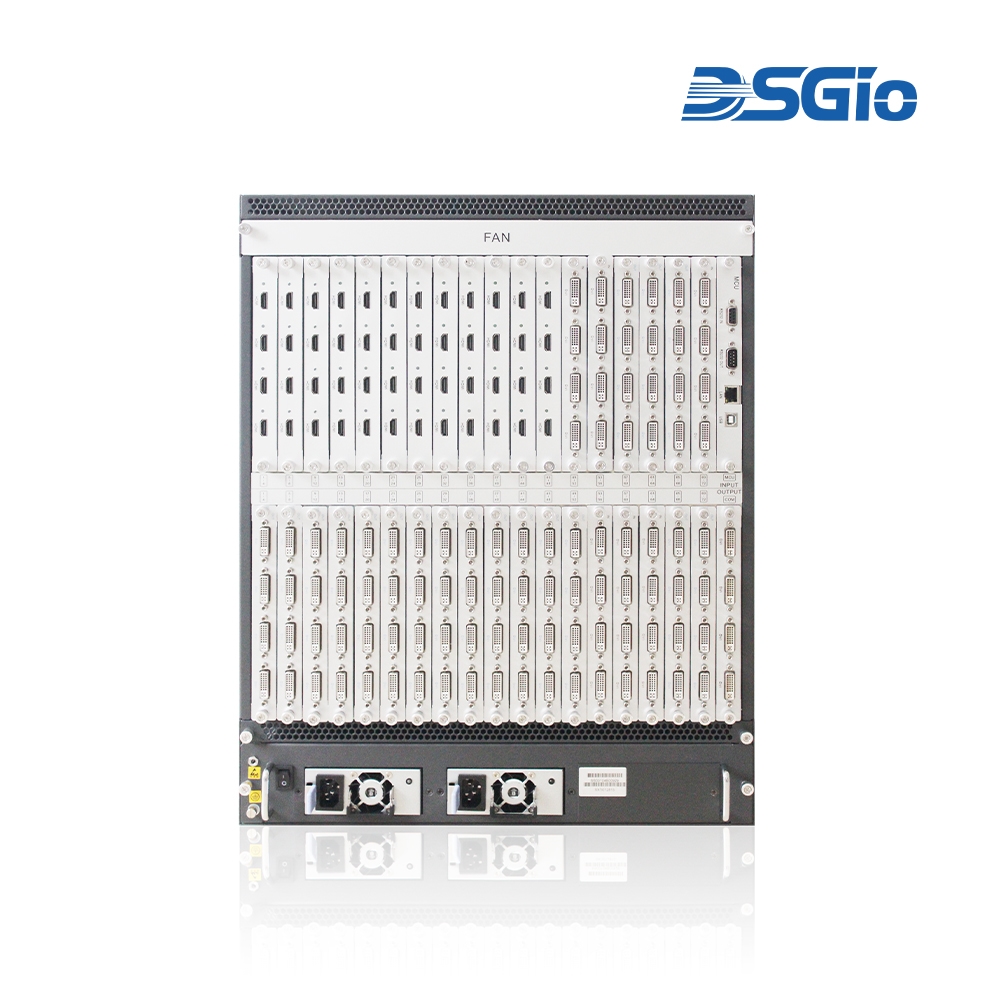
3. The device supports mixed input and output card insertion, and the card slot is a bidirectional data channel slot that supports input and output customization. A single card slot can support both input and output boards. Flexible configuration of input and output signal types and channel numbers.
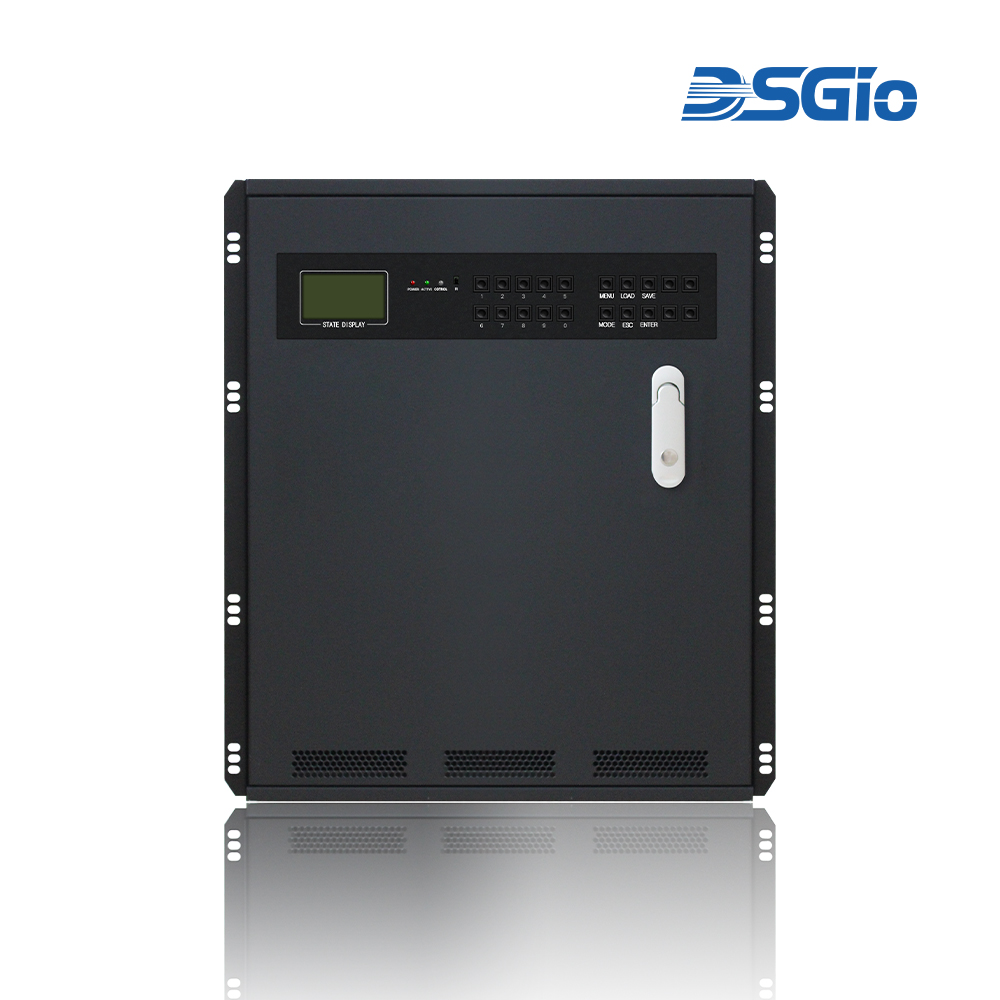
4. LCD display function: The front panel has an LCD display screen of ≥ 3.5 inches and 16 shortcut switch keys. The front panel can be operated and the LCD screen status can be read. The LCD screen can display the signal source status and channel display in real time, MAC and IP addresses, baud rate, and can be used for signal switching and pre plan storage and calling.
5. A single fiber optic seat I/O board has 16 LC fiber optic interfaces. No adapter cables or conversion devices are required, and a single input and output board can support no less than 8 HDMI signals.
6. The host has port adaptation technology, which enables the fiber optic cable to be inserted into another spare port. The host realizes automatic addressing and recognition, and the data signal is quickly recovered. The signal recovery time is ≤ 1s
7. Multiple backup methods, supporting point-to-point redundant backup, semi redundant backup, and fully redundant backup mechanisms. Any input signal supports dual line hot backup, and the equipment can automatically switch to the backup line or backup point-to-point link in case of main line failure. Supports backup of two hosts, and automatically switches to the backup system in case of any host or link failure. The switching process is imperceptible, does not require manual intervention, and does not require resetting. Automatic hot jump time ≤ 8ms.
8. Fiber optic processing technology using lossless and uncompressed non coding and decoding methods, with bidirectional interaction capabilities for audio, video, and control. Delay<1ms.
· Hardware DSP+FPGA Architecture: Uses pure hardware architecture with DSP and FPGA, CAN bus control technology, and professional processing chips. No Windows operating system, no crashes, no black screen or pixelation issues.
· Industrial-Grade Chassis with CPCI Structure: Features an industrial-grade chassis with a CPCI structure. Modular design with plug-in modules for input acquisition, output, switching, control, fans, power, etc.
· Parallel or Vertical Slot Design: Card slots in the chassis are designed for parallel horizontal or vertical ground insertion, allowing for efficient heat dissipation, hot-swapping, and uninterrupted system operation.
· Front Panel with 16 Buttons: The front panel has 16 buttons that can be grouped for multi-wall modes, enabling rapid switching between 30 different scenes. Cross-Point full cross-scheduling architecture ensures high-speed data transmission for internal high-definition processing and transmission.
· Real-time Display: The front panel’s LCD panel supplies real-time device status display and real-time parameter monitoring.
· Integration of Splicing, Matrix, Fusion, Full-Color LED, Central Control, etc.: All-in-one solution integrating splicing, matrix, fusion, full-color LED, central control, and more.
· Supports 4K*2K Ultra-High-Definition Signal Capture and Output: Capable of handling 4K*2K ultra-high-definition signal capture and output.
· Seamless Switching for Multiple Splicing Display Walls: Multiple splicing display wall signals can switch seamlessly without interference, and input signals from various subsystems can be shared and called.
· Instant Switching with No Black Screen, Resynchronization, or Delay: Offers instant switching with no black screens, no resynchronization, and no delay. Equipped with EDID emulation management.
· One-Click Preset Functionality: Supports one-click preset functions, and switching between different scenes is seamless with no black screens, resynchronization, or delay.
· Mixed Input Signals: Supports mixed input signals, including DVI, HDMI, SDI, VGA, CVBS, YPBPR, HDBaseT, IP streaming, DP, DVI-X, 3.5mm audio, etc. Simultaneously supports 4K resolution inputs like DP, HDMI 1.4, HDMI 2.0, and more.
· Output Support: Output supports DVI-I, HDMI, SDI, VGA, CVBS, YPBPR, DVI-X, HDMI 2.0, etc.
· Significant Cost Savings, Improved System Stability, and Reliability: Supplies significant cost savings while enhancing overall system stability and reliability.
· Open API Protocol: Supports third-party central control, keyboard, and OSD control via an open API protocol.
Parameter | Enterprise Video Wall Processor Matrix | |||
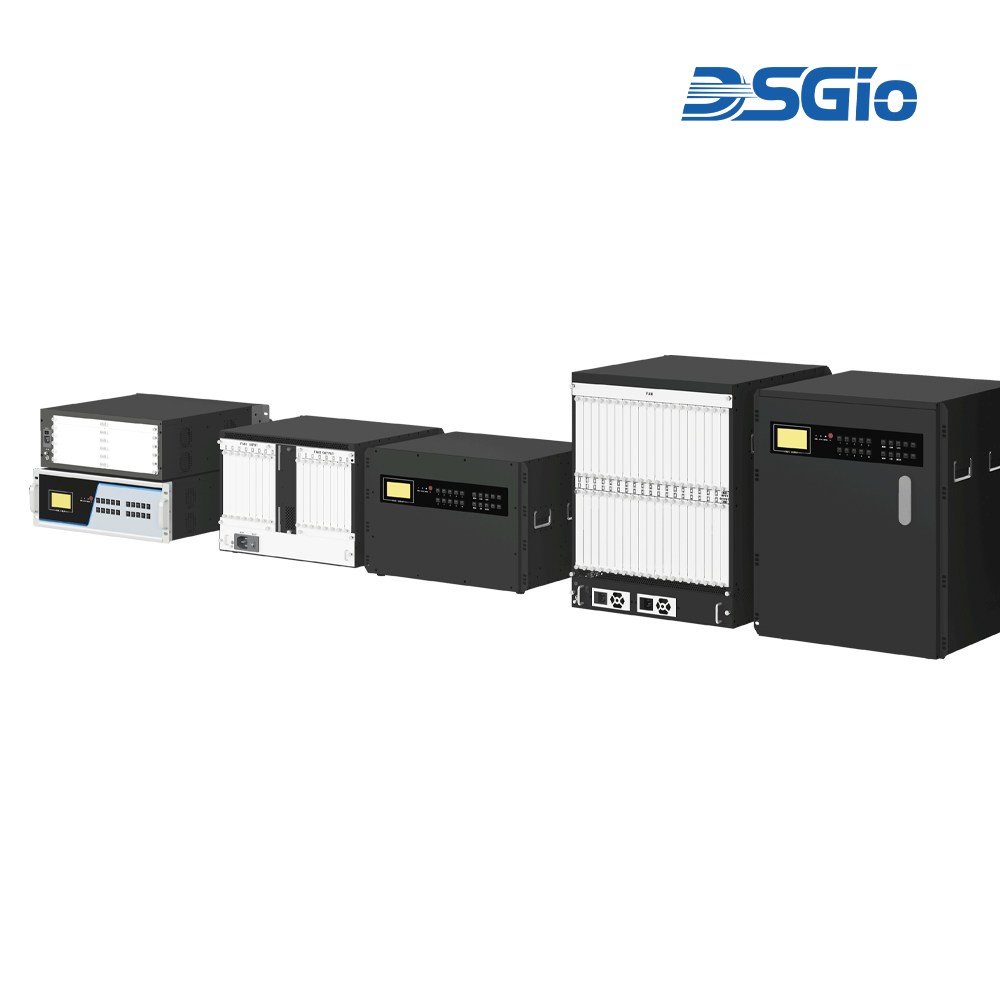
Interface | Chassis size | 3.5U | 7U | 12.5U |
Number of slots | 11 | 17 | 36 | |
| Input output mixed insertion | ✔ | ✔ | ✔ | |
Redundant power supply | ✔ | ✔ | ✔ | |
Video parameters | Fiber optic board interface | Single card 8-channel high-speed dual core LC fiber optic interface input/output | ||
Fiber optic interface | LC connector | |||
Fiber type | Multi mode/Single mode (optional) | |||
wavelength | Multimode: 850nm/Single mode: 1310nm | |||
transmission distance | Single mode fiber optic 20km, multi-mode fiber optic 500m | |||
signals | DVI/HDMI/VGA/YPbPr/CVBS/SDI/HDbaseT/Fiber/IP/Fiber KVM/DP/HDMI2.0 (optional) | |||
Signal protocol | DVI1.0 protocol, HDMI2.0 compatible with HDMI1.4 standard, supports HDCP1.3 protocol | |||
resolution | Maximum 3840 x 2160@60Hz , downward compatible with normal resolution | |||
Audio parameters | frequency response | 20 Hz ~ 20 kHz | ||
Signal type | Unbalanced stereo audio | |||
Signal format | AAC/AC3/AIF/FLAC/M44/MP3/MPC/OGG/WAV/WMA | |||
RS232 Control | interface | RS-232,DB9 | ||
Baud rate | Min:9600bps Max:115200bps | |||
port structure | 2 = TX,3 = RX,5 = GND | |||
software | Visual comprehensive management platform | |||
Network control | interface | RJ-45 | ||
Protocol | TCP/IP | |||
rate | 10M~1000M,Full duplex or half duplex | |||
Electrical specifications | source | 100V~240VAC 50/60Hz | ||
power dissipation | ≤1200W | |||
Working | 0℃-50℃,10%-90% | |||
Storage | -20℃-60℃,10%-90% | |||
Chassis specifications | Standard industrial control case | |||
hours | 365 days×24 hours | |||
Source: DSGIO — SC-36. Verify with manufacturer.