




Ransomware encrypted your management tools. Here’s the one recovery path that still works.


Ransomware Recovery: Management Tools Out-of-Band Path
When ransomware infiltrates your data centre, it typically encrypts the primary management tools you rely on for recovery and response. This creates a critical catch-22: your standard recovery infrastructure is locked down, leaving your operations paralyzed. Understanding alternative recovery pathways is essential for any B2B data centre managing sensitive infrastructure.
Out-of-band management solutions like Nodegrid provide an independent access layer that operates outside your main network, remaining functional even when primary management tools are compromised. This approach enables your team to regain control, assess damage, and execute recovery procedures without depending on encrypted or compromised systems. For enterprise data centres, implementing proper out-of-band infrastructure is a proven ransomware resilience strategy.
Enova Technologies | ZPE Systems Nodegrid | Out-of-Band Management
Ransomware encrypted your management tools. Here’s the one recovery path that still works.
Published 28 May 2026 | Enova Technologies Pte Ltd
When ransomware hits a data centre network, the first tools to stop working are usually the ones the team planned to use for recovery.
SSH connections drop when routing infrastructure is encrypted and routing tables stop propagating. Monitoring platforms hosted inside the production environment go offline. Remote console tools running as virtual machines on the same fabric become unreachable. If the management plane and production plane share the same IP network, a ransomware incident does not just encrypt servers. It locks out the engineers trying to recover them.
This is a structural problem, not a configuration problem. It cannot be solved by better passwords or faster patching. The architecture decision that determines whether engineers retain access during an incident is made long before the incident occurs.
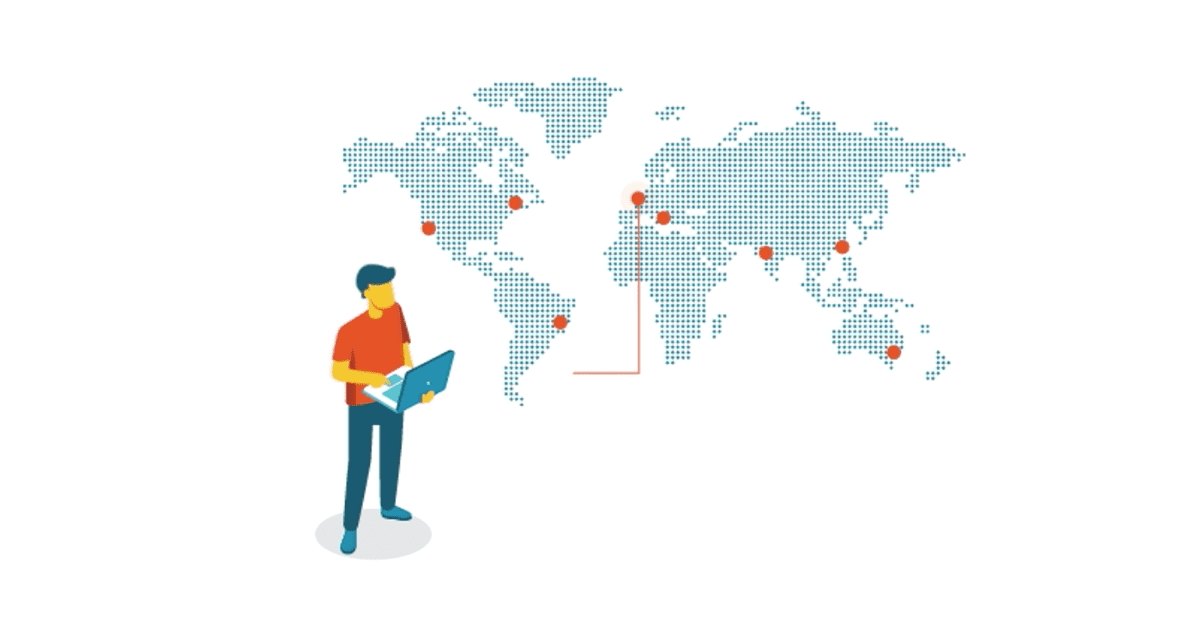
ZPE Systems Nodegrid provides centralised out-of-band management across data centre and distributed infrastructure. Image: ZPE Systems.
The problem with in-band management
In-band management means all management traffic — SSH sessions, SNMP polling, remote console connections, API calls to management platforms — travels on the same IP fabric as production traffic. When a ransomware attack takes down that fabric, management access fails at the same time.
The Colonial Pipeline attack in May 2021 illustrated this at scale: a ransomware infection on the business IT network forced the operator to shut down pipeline control systems because teams could not safely manage them during the incident. The management tool being on the same network as the infected systems creates a fundamental constraint on what recovery looks like.
In a data centre context, the practical consequence is straightforward: if every device’s only accessible management path is SSH or IP-based remote console, and the IP network is down, engineers must physically reach the site to connect console cables. For distributed infrastructure across multiple sites, that means hours before recovery can begin.
What out-of-band management provides
Out-of-band (OOB) management creates a separate access path at the physical layer. A dedicated serial console server connects to each device’s console port via RS-232 — the same port used during initial configuration, which provides direct hardware-level access below the operating system and below IP networking. That console server then connects to the engineer via a path entirely separate from the production network: typically a cellular link (4G/LTE) or a dedicated management circuit.
Ransomware on the production network cannot reach the OOB path. There is no shared IP fabric between the management channel and the infrastructure it manages.
The architectural concept that formalises this separation is Isolated Management Infrastructure (IMI): the management plane is not just on a separate VLAN; it is on a separate physical transport with no routing adjacency to production infrastructure.
What a ransomware incident looks like: in-band vs OOB
Management plane architecture determines whether recovery tools survive the incident
In-band management only | With Nodegrid OOB (IMI) |
Left: in-band management fails when ransomware takes down the production network. Right: Nodegrid OOB provides a separate recovery channel via serial console and cellular, unaffected by production network state.
ZPE Systems Nodegrid: OOB for data centres
ZPE Systems’ Nodegrid platform implements the IMI architecture for data centres and distributed infrastructure. The Nodegrid Serial Console Plus (NSCP) is a 1U rack appliance providing up to 96 managed serial console ports, with built-in dual-SIM cellular (4G/LTE), Wi-Fi, and integration with ZPE Cloud for centralised management. The appliance runs on a vendor-neutral Linux platform with application hosting capability, allowing teams to run automation and orchestration tools directly on the OOB device.
A ZPE case study with a top-10 US engineering school documents 99.999% uptime for a small IT team managing a large distributed campus infrastructure remotely, with no site visits required for most recovery events. The combination of serial console access, cellular OOB path, and centralised management gives the team access to devices in any network state.
How Nodegrid builds the OOB recovery path
Five capabilities that define isolated management infrastructure
| # | Capability | Why it matters in a ransomware recovery |
|---|---|---|
| [1] | Serial console access | Connects to every device’s console port via RS-232, below the OS and below IP. Works when Ethernet is down, routing is broken, or the device is in a crashed state. |
| [2] | Isolated management plane | OOB traffic never touches the production network. No shared IP fabric between the management path and the infrastructure it manages. No shared attack surface. |
| [3] | Dual-SIM cellular OOB path | 4G/LTE connectivity provides an out-of-band channel independent of WAN links. If the site’s internet uplinks are encrypted or severed, the cellular path to Nodegrid remains up. |
| [4] | ZPE Cloud management | Central management portal for all sites, accessible via the OOB path. When in-band monitoring and ticketing tools are offline, ZPE Cloud gives visibility across the infrastructure through the separate channel. |
| [5] | Security-hardened platform | Nodegrid runs on a Synopsys-validated codebase (Black Duck, Coverity), with TPM 2.0, self-encrypted disk, system configuration checksum, and built-in one-click firewall. The OOB appliance itself is not a soft target. |
The tool you use to recover your network should not be on the same segment as the network being recovered. When the management plane and production plane share the same IP fabric, the assumption that SSH will still work after a ransomware incident is wrong. The architecture decision has to be made before the incident, not during it.
Enova is a ZPE Systems partner in Singapore. If your current recovery plan relies on SSH or IP-based management tools, we can walk through where Nodegrid OOB changes the picture for your environment.
Ask about Nodegrid OOB for your data centre →Frequently asked questions
What is out-of-band management and how is it different from in-band management?
In-band management means management traffic — SSH, SNMP, remote console — travels on the same IP network as production traffic. If the production network fails, management access fails with it. Out-of-band (OOB) management uses a physically separate path: a dedicated serial console server connects to device console ports via RS-232, and connects to the engineer via a separate cellular link or dedicated management circuit. OOB access works even when the production network is offline, encrypted, or routing incorrectly.
Why does ransomware knock out in-band management tools?
Ransomware typically encrypts files across the production network, including servers and virtual machines that host management tools. When core network infrastructure is encrypted or shut down, IP connectivity fails. SSH sessions drop. Monitoring platforms hosted inside the production environment become unreachable. If the management plane and production plane share the same IP fabric, they fail together.
What is Isolated Management Infrastructure (IMI)?
Isolated Management Infrastructure (IMI) is the architectural approach of separating the management plane from the production plane at the physical layer, so that management access cannot be disrupted by events on the production network. IMI typically uses dedicated serial console servers, separate cellular circuits or management VLANs, and centralised OOB management software. The goal is to ensure engineers can always reach infrastructure for recovery, even during a complete production network outage.
How does a serial console server provide access when the network is down?
A serial console server connects to the console port on each network device, server, or appliance via an RS-232 serial cable. This provides direct hardware-level access below the operating system and below IP networking. The console server itself connects to the engineer via a separate path (cellular, dedicated circuit, or management VLAN). Even if the device’s Ethernet interfaces are down or the IP routing fabric has failed, the console port remains accessible through the OOB server.
What is ZPE Systems Nodegrid and what does it do?
ZPE Systems Nodegrid is an out-of-band management platform built on a vendor-neutral Linux architecture. The Nodegrid Serial Console Plus (NSCP) is a 1U rack appliance providing up to 96 managed serial console ports for data centre environments, with built-in dual-SIM cellular, Wi-Fi, and ZPE Cloud integration. Nodegrid is used to manage infrastructure remotely via serial console, run automation workflows, and maintain access during production network outages. Enova Technologies is a ZPE Systems partner in Singapore.
How does cellular out-of-band management work in a ransomware recovery scenario?
When a ransomware attack takes down a site’s production WAN links, engineers can still reach the Nodegrid appliance via its built-in cellular connection (4G/LTE). That cellular path is entirely separate from the production network and is unaffected by anything that happens to the data plane. From the Nodegrid’s cellular connection, engineers can access any device’s serial console port, execute recovery commands, reload configurations, and restore services — without needing to be on-site and without depending on any infrastructure the ransomware has already reached.

Published by
eNOVA Technologies is Singapore's specialist distributor for data centre IT management solutions, representing Adder, Guntermann & Drunck, Raritan, Sunbird, ZPE Systems, and VuWall across Singapore and Southeast Asia. Our technical content is produced with AI assistance and reviewed by our in-house team before publication.
This article was produced with AI assistance and reviewed by the eNOVA Technologies team. All technical claims are verified against manufacturer documentation.