


Virtual production KVM: how Sony at Pinewood and Dimension Studio run ADDERLink INFINITY

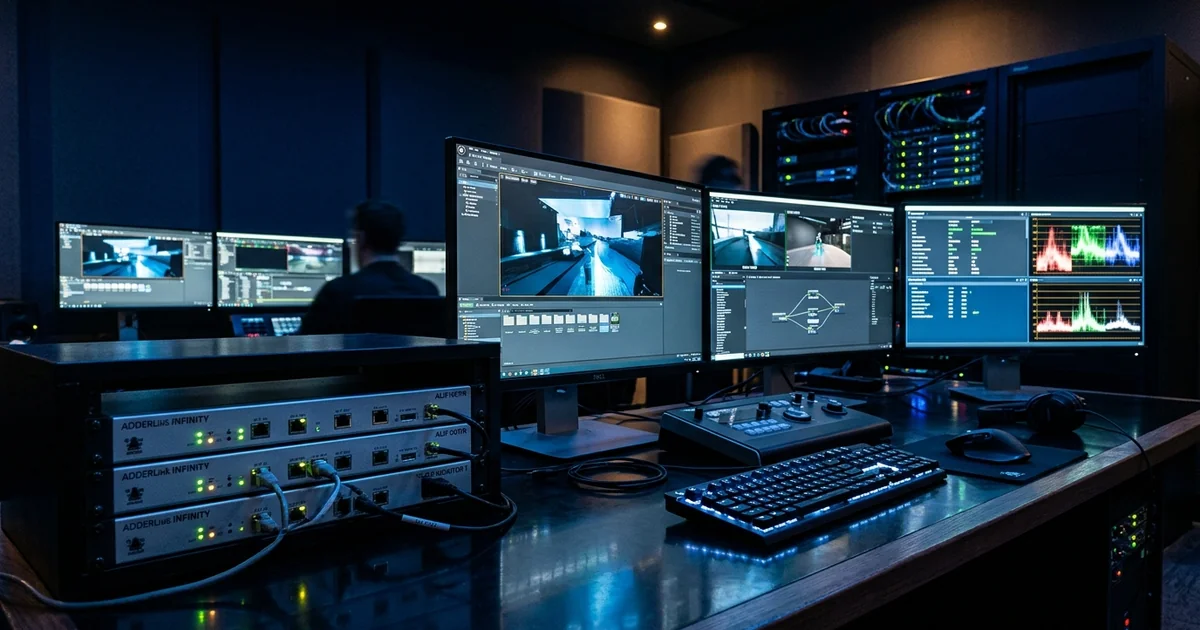
Virtual Production KVM: Sony’s Pinewood Setup
Virtual production environments require seamless control across multiple rendering engines and workstations, often spread across different physical locations. Managing these complex systems efficiently is critical for maintaining production timelines and ensuring technical staff can operate the entire stage from a centralized control point.
ADDERLink INFINITY delivers IP-based KVM switching that enables operators to access and control all virtual production computers from a single workstation, eliminating the need for multiple keyboards, monitors, and mice. With support for high-bandwidth video and ultra-low latency performance, this enterprise-grade solution keeps rendering pipelines responsive while providing the redundancy and reliability that professional broadcast and film production demands.
Virtual production KVM: how Sony at Pinewood and Dimension Studio run ADDERLink INFINITY
Sony’s Pinewood centre and Dimension Studio both reach their virtual production systems through Adder IP KVM. The two case studies show a demonstration centre and a touring production rack, with the same ADDERLink INFINITY family underneath.
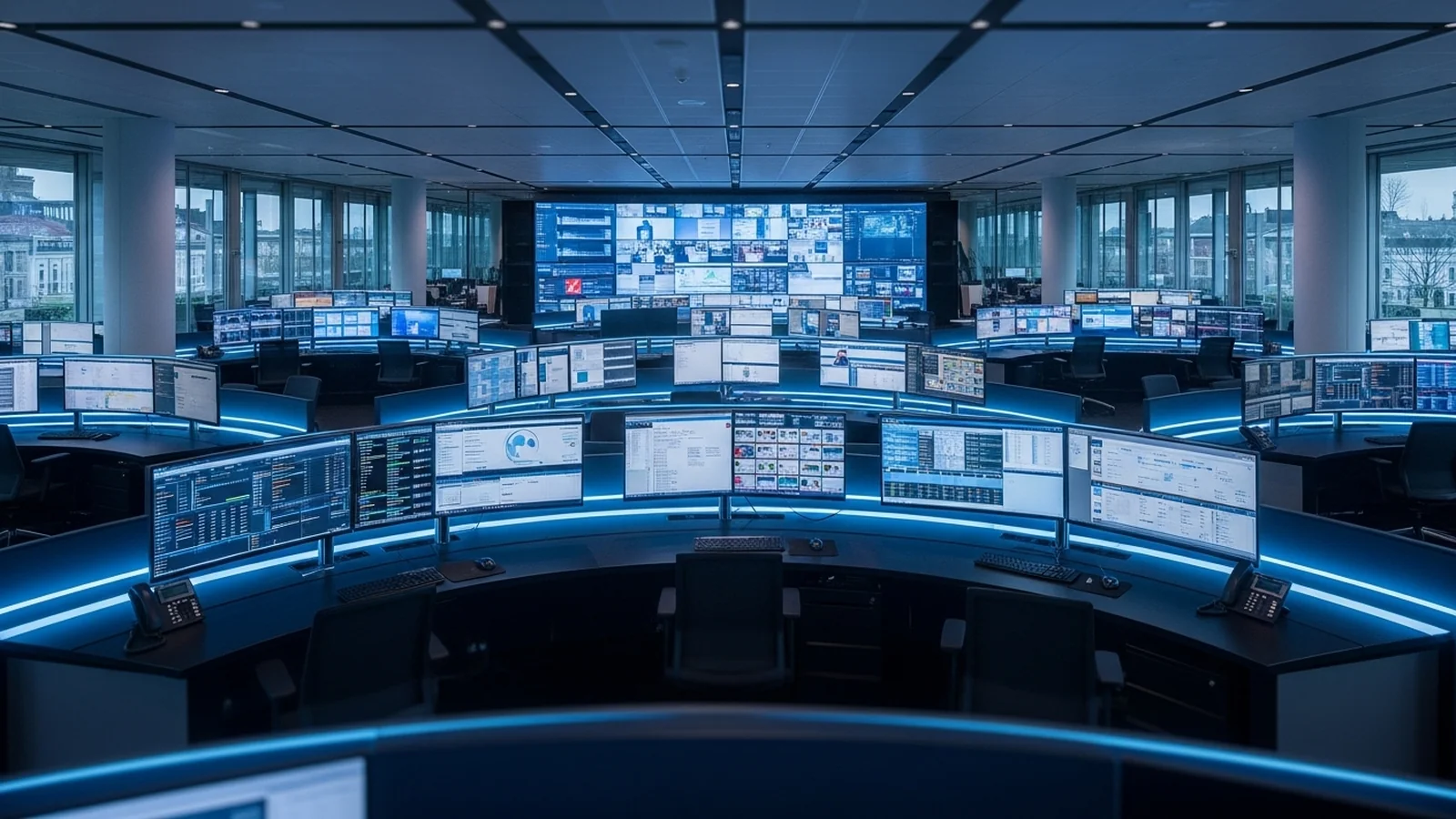
A virtual production stage runs on many computers. Rendering engines, camera tracking, media servers, LED processors and control software all need an operator. Put a keyboard and screen at each one and the room fills with desks.
Adder has published case studies this year that show the alternative. Keep the machines in a rack and reach them over IP KVM. Both studies below are Adder’s own, so treat the claims as vendor-reported.
What IP KVM means in a studio
IP KVM extends the keyboard, video and mouse of a computer over a standard network. Operators sit at any position and reach any connected system, while the computers stay in a rack.
In virtual production this replaces point-to-point cabling. A management layer, which for Adder is AIM, controls which operator can reach which machine.
Sony at Pinewood Studios
Sony’s Digital Media Production Centre (DMPC) sits inside Pinewood Studios in the UK. Adder describes it as a demonstration space where major production companies experience Sony’s virtual production, live production, broadcast and cinematic tools first-hand.
Sony upgraded the DMPC in May 2023 to add a virtual production space and needed a KVM system suited to it. Adder’s case study says the answer was the ADDERLink INFINITY 4000 series with the ADDERLink INFINITY Manager (AIM) software. The aim was to extend video, audio and USB over IP so staff can reach multiple 4K systems from a single workspace.
Adder reports that staff can switch sources at any frame rate or resolution, reach systems remotely, and expand the set-up as virtual production changes. A Sony technical solutions specialist says the software behind virtual production is accessed “through the Adder KVM systems.”
Dimension Studio: a failure on set
Adder’s 29/07/2026 ADDERTalks post with Dimension covers the other side. Dimension’s work centres on in-camera visual effects on LED volumes, and its Virtual Production Anywhere system packs rendering, computers, storage and Adder IP KVM into mobile racks and flight cases that move between LED studios.
During a London production, the set recreated a frozen landscape with fake snow, haze and bright white imagery. Temperatures reached about 45°C. The existing KVM system failed and operators had to reach Unreal Engine remotely from laptops.
Dimension tested ADDERLink INFINITY in its mobile racks, then deployed the INFINITY 4000 across the system. The requirements it states are 4K60 10-bit support, a remote machine that feels like one under the desk, and integration with its existing network, with better management and monitoring.
Beyond film
Adder’s 11/06/2026 post argues that virtual production now reaches live events, experience centres and corporate studios. It says SDI systems are hardware-intensive and fixed by design, while IP routes signals dynamically across a network. For Singapore media, events and experience-centre projects, that is the relevant point.
What Sony shows
- Demonstration centre, May 2023 upgrade
- INFINITY 4000 series with AIM
- Single workspace, remote access
What Dimension shows
- A KVM failure at about 45°C
- INFINITY 4000 in mobile racks
- 4K60 10-bit as a stated requirement
What the case studies do not say
Both are published by Adder. Neither gives latency, uptime, channel count or cost figures. Sony’s centre is a demonstration space, not a working production stage. Dimension does not date the failure or name the earlier KVM vendor. Adder’s blogs describe latency in general terms only, so we have not quoted any. Neither study mentions a Singapore installation.
| Sony DMPC hardware | ADDERLink INFINITY 4000 series with AIM |
| Sony upgrade | Virtual production space added May 2023 |
| Dimension hardware | ADDERLink INFINITY 4000 in mobile racks |
| Dimension requirement | 4K60 10-bit, integration with existing network |
| Management | AIM: routing, permissions, configuration and monitoring |
| Pricing and lead times | Not published in either study |
Frequently asked questions
How does Sony use IP KVM at Pinewood Studios?
Adder says Sony’s Digital Media Production Centre uses the ADDERLink INFINITY 4000 series with AIM management software. Staff switch between virtual production and live production systems from one workspace, at any frame rate or resolution, and can reach systems remotely.
What happened at Dimension Studio?
On a London production with a snow scene on an LED volume and temperatures of about 45°C, Dimension’s existing KVM system failed and operators reached Unreal Engine from laptops. Dimension then tested and deployed ADDERLink INFINITY 4000 in its mobile racks.
Why use IP KVM instead of point-to-point KVM in virtual production?
Adder says point-to-point systems struggle as studios add systems, and tie workstations to fixed locations. IP KVM lets operators at any position reach any system.
Does IP KVM add latency that matters for real-time work?
Adder describes its system as feeling like a direct connection but publishes no measured figure in these studies. Test with your own sources and displays before committing. Dimension’s stated need is that a remote machine feels like one under the desk.
Is this only for film studios?
No. Adder’s 11/06/2026 post says the same approach applies to live events, experience centres and corporate studios, where it says IP suits better than fixed SDI. Those are published claims, not tested by Enova.
What do I need to scope an IP KVM layout for a studio?
The number of systems, the operator positions, the resolution and frame rate per source, whether remote access is needed, and your network. Enova, an authorised Adder partner, can propose an ADDERLink INFINITY layout from those.
Planning a virtual production stage
Enova Technologies is an authorised Adder partner in Singapore. Send us the number of systems, operator positions and the resolution and frame rate you need, and we will propose an ADDERLink INFINITY layout.
Ask about Adder IP KVMSources: Adder, Sony case study. Adder, Solving the Connectivity Challenge in Virtual Production: Lessons from Sony at Pinewood Studios, 19 May 2026. Adder, Behind the Scenes of Virtual Production With Dimension Studio, 29 July 2026. Adder, Virtual Production Beyond Film, 11 June 2026. Adder, 7 Reasons Why Top Studios Use Adder in Virtual Production, 7 September 2026.

Published by
eNOVA Technologies is Singapore's specialist distributor for data centre IT management solutions, representing Adder, Guntermann & Drunck, Raritan, Sunbird, ZPE Systems, and VuWall across Singapore and Southeast Asia. Our technical content is produced with AI assistance and reviewed by our in-house team before publication.
This article was produced with AI assistance and reviewed by the eNOVA Technologies team. All technical claims are verified against manufacturer documentation.