


After the Breaker Trips, What Does Your PDU Tell You?

Enova Technologies | Raritan PX4 | Data Centre Power
After the Breaker Trips, What Does Your PDU Tell You?
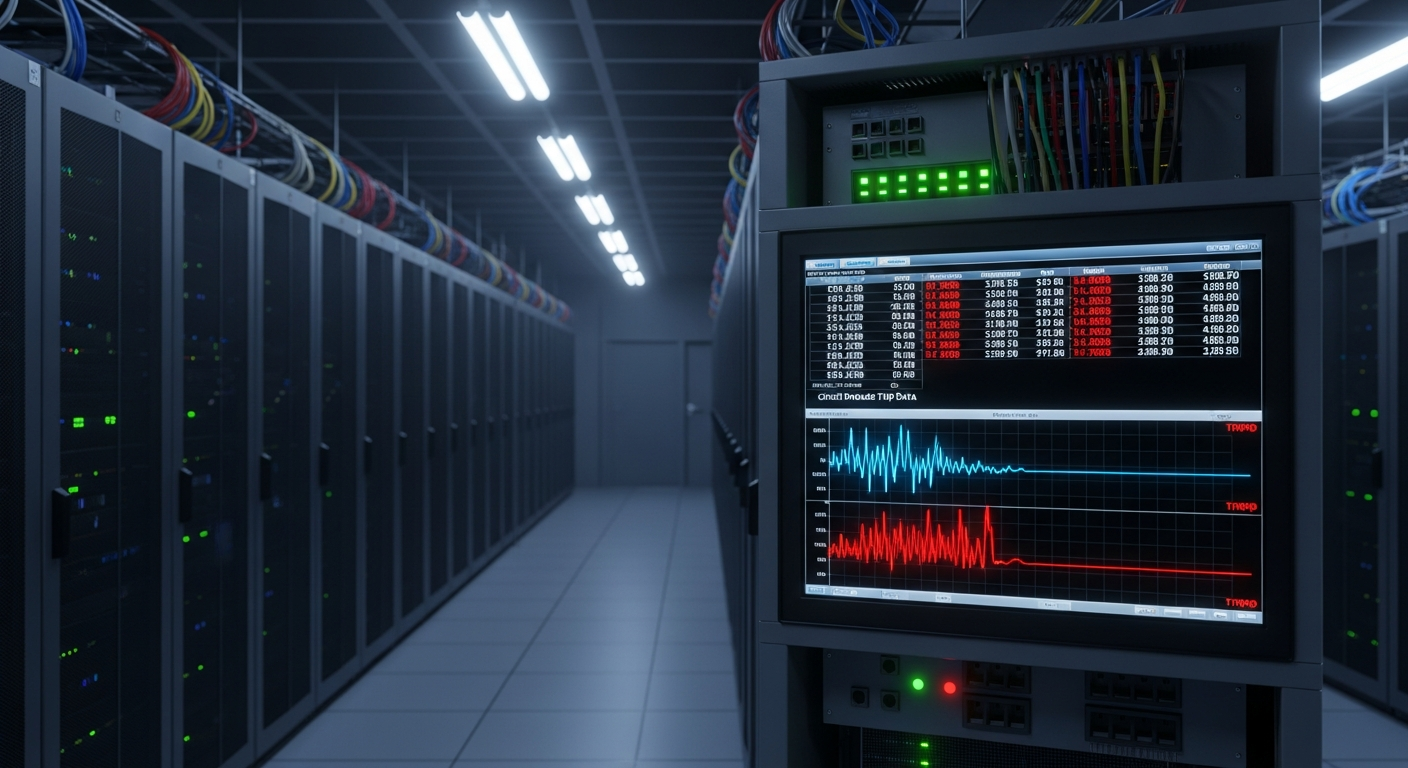
Circuit breaker trip forensics is the ability of an intelligent rack PDU to identify which specific outlet caused a circuit breaker trip, capture the power waveform at the moment of the event, and isolate that outlet automatically so power can be restored to all others. The Raritan PX4 implements this through its built-in Trip Cause Outlet Handling (TCOH) feature.
A circuit breaker trips at 2am. Your PDU sends an alert: load exceeded threshold. No outlet ID. No waveform. No indication of whether the problem is still live. You start a manual audit.
The Raritan PX4 changes what happens next.
Incident Recovery: Basic PDU vs Raritan PX4
What happens after a circuit breaker trip
Basic PDU — 2 to 4 hours
Breaker
trips
Alert:
load exceeded
Manual audit
outlet by outlet
Root cause
identified
Raritan PX4 — under 5 minutes
Breaker
trips
Outlet ID +
waveform captured
Offending outlet
isolated (TCOH)
Others restored
in <5 min
[1] Circuit Breaker Trip Forensics
Exact outlet identification at the moment of failure
The PX4 logs which outlet drew the excess current that caused the trip, along with a timestamp and captured power data. Fault identification drops from a multi-hour manual audit to a single alert.
[2] Trip Cause Outlet Handling (TCOH)
Automatic isolation — the rest of the rack stays live
TCOH isolates the identified outlet automatically. The remaining outlets on the circuit are restored without physical intervention. Recovery time: under 5 minutes. Downtime for uninvolved devices: zero.
[3] Waveform Capture
The electrical signature of the event, not just the timestamp
At the moment of a trip, the PX4 captures the current and voltage waveform. This lets you distinguish between a hard fault, an inrush event, and a harmonic problem — without sending an engineer on-site.
[4] Total Harmonic Distortion (THD)
Continuous measurement at outlet level
Server PSUs generate 30–40% THD under typical load. The PX4 monitors THD at inlet and outlet level continuously, replacing the need for a periodic harmonic survey and giving you early warning before equipment is damaged.
[5] Inrush Current per Outlet
Measure the spike that steady-state monitoring misses
AI GPU servers can draw 5–10x rated load at power-on for the first 20–50ms. The PX4 measures this per outlet, allowing you to sequence power-ons safely and prevent nuisance trips during maintenance windows.
[6] ±0.5% Metering Accuracy
IEC 62053-21 and IEC 61557-12 certified
Accurate enough for capacity planning and billing-grade power reporting. At 50 kW per rack, a 2% measurement error translates to 1 kW of invisible load — the PX4 keeps that margin tight.
Outlet-Level Visibility — Rack A, PDU-01
R/G/B LED indicators show real-time outlet health at a glance
U01
360W
U02
290W
U03
TRIP
U04
170W
U05
380W
U06
210W
U07
145W
U08
90W
Total Harmonic Distortion — What the PX4 Detects
Continuous measurement at inlet and outlet level — no external analyser required
Normal Supply
Pure sine wave — THD <5%
Harmonic Distortion
3rd + 5th harmonics — equipment at risk
Harmonics from server PSUs cause overheating, premature component failure, and unexplained load imbalances. The PX4 measures current and voltage THD in real time at every outlet, replacing the need for a periodic harmonic survey.
Inrush Current — Why Breakers Trip During Maintenance
Measured per outlet at power-on. The PX4 captures what steady-state monitoring misses.
At power-on, a device can draw 5–10x its rated current for the first 20–50ms. Power on enough devices simultaneously and the cumulative inrush trips the breaker — even if total steady-state load is within limits. The PX4 measures inrush per outlet so you can sequence power-ons safely.
PX4 vs Basic PDU — At a Glance
Measured at outlet level in real time. IEC 62053-21 / IEC 61557-12 certified accuracy.
| Capability | Basic PDU | Raritan PX4 |
|---|---|---|
| Total load (RMS) | ✓ | ✓ |
| Outlet-level wattage | ✗ | ✓ |
| Circuit breaker trip forensics | ✗ | ✓ |
| Waveform capture at event | ✗ | ✓ |
| Total harmonic distortion (THD) | ✗ | ✓ |
| Inrush current per outlet | ✗ | ✓ |
| Reactive power, crest factor, displacement PF | ✗ | ✓ |
| Metering accuracy (IEC certified) | ±2–3% | ±0.5% |
A basic PDU tells you a breaker tripped. The PX4 tells you which device caused it, what the waveform looked like, and lets you restore power to everything else while that device stays isolated.
Frequently Asked Questions
What is circuit breaker trip forensics in a PDU?
Circuit breaker trip forensics is a feature in intelligent PDUs like the Raritan PX4 that records which specific outlet caused a circuit breaker to trip, along with the current waveform at the moment of the event. Unlike a basic PDU that only reports a load threshold exceeded, trip forensics gives you an exact outlet ID, a waveform capture, and power-on sequence data — reducing fault identification from hours to minutes.
How does the Raritan PX4 identify which outlet caused a circuit breaker trip?
The PX4 monitors current at every outlet continuously at 0.5% accuracy (IEC 62053-21). When a breaker trips, it cross-references the load history across outlets to identify which device drew the excess current. The outlet ID, timestamp, and a captured waveform are logged and sent via alert immediately. The TCOH feature can then isolate that outlet automatically while restoring power to all others.
What is TCOH (Trip Cause Outlet Handling)?
TCOH, or Trip Cause Outlet Handling, is a Raritan PX4 feature that automatically isolates the outlet identified as the cause of a circuit breaker trip. Once isolated, the PDU restores power to all other outlets on the circuit without physical intervention. Recovery time is under 5 minutes versus the 2–4 hour manual audit typical of a basic PDU.
What is total harmonic distortion (THD) and why does it matter in a data centre?
Total Harmonic Distortion (THD) measures the distortion introduced into AC power by non-linear loads such as server PSUs. High THD causes overheating of transformers and UPS systems, premature component failure, and unexplained load imbalances. Server PSUs typically generate 30–40% THD under load. Standard PDUs do not measure THD. The Raritan PX4 monitors THD at both inlet and outlet level continuously, eliminating the need for periodic third-party harmonic surveys.
Can a rack PDU measure inrush current per outlet?
Most cannot. The Raritan PX4 measures inrush current at every individual outlet at power-on. AI GPU servers can draw 5–10x their rated load for the first 20–50 milliseconds when powered on. If multiple devices power on simultaneously, the cumulative inrush can trip the breaker even when steady-state load is within limits. PX4 inrush data allows engineers to sequence power-ons safely and prevent nuisance trips during maintenance windows.
How accurate is the Raritan PX4’s power metering?
The Raritan PX4 meets IEC 62053-21 (energy metering) and IEC 61557-12 (power quality measurement) accuracy standards, delivering ±0.5% metering accuracy at outlet level. In a 50 kW AI rack, a typical 2–3% basic PDU error margin represents 1–1.5 kW of invisible load — enough to compromise capacity planning and power budgeting decisions.
Enova Technologies is an authorised Raritan partner in Singapore. We can arrange a live demo or a site-specific discussion on intelligent PDU deployment.
Request a Raritan PX4 demo →
Published by
eNOVA Technologies is Singapore's specialist distributor for data centre IT management solutions, representing Adder, Guntermann & Drunck, Raritan, Sunbird, ZPE Systems, and VuWall across Singapore and Southeast Asia. Our technical content is produced with AI assistance and reviewed by our in-house team before publication.
This article was produced with AI assistance and reviewed by the eNOVA Technologies team. All technical claims are verified against manufacturer documentation.