

The spreadsheet was fine until the racks got dense

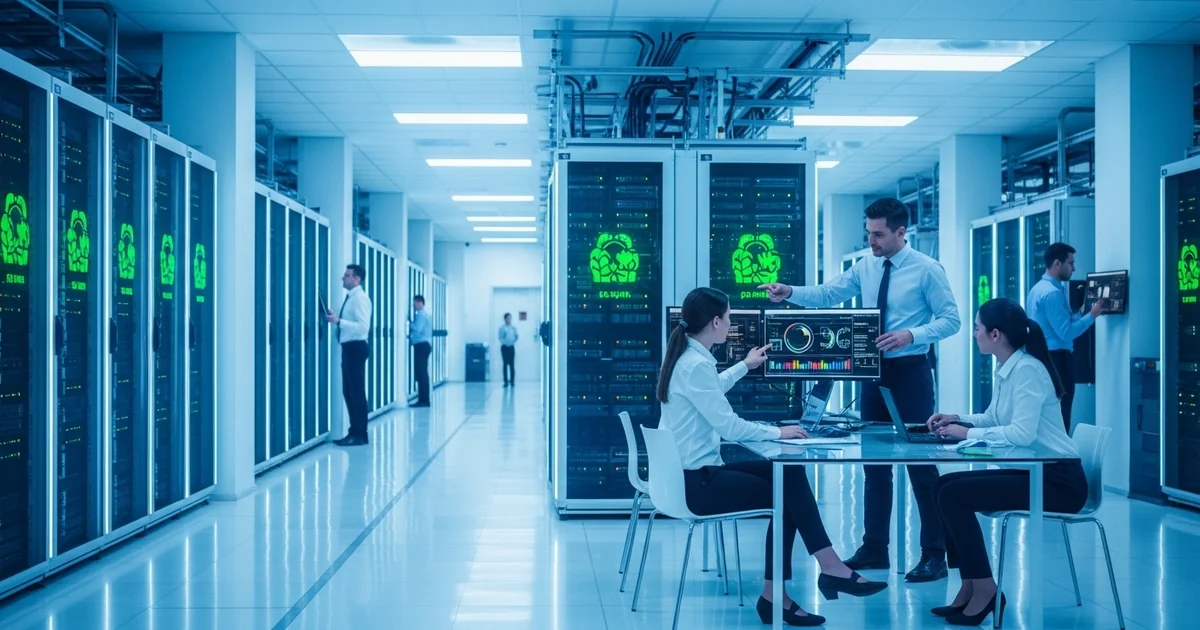
Data Center Capacity Planning for High-Density Racks
Traditional spreadsheet-based capacity planning worked fine when server racks consumed 5–10 kW. But modern AI training infrastructure can exceed 100 kW per rack, rendering legacy planning methods obsolete. Most data centres still rely on spreadsheets and nameplate ratings—tools that simply weren’t designed for today’s power-dense environments.
Modern capacity planning solutions provide real-time power monitoring, thermal modeling, and predictive analytics that go far beyond static spreadsheet entries. These systems track actual power consumption across high-density racks, identify cooling bottlenecks before they occur, and optimize rack placement to maximize infrastructure efficiency. With AI workloads pushing boundaries, data centres need automated tools that can handle dynamic demand and prevent costly overprovisioning or capacity shortfalls.
A traditional server rack drew 5 to 10 kW. An AI training rack can exceed 100 kW. The planning method most data centres still rely on, a spreadsheet and a nameplate rating, was designed for the smaller number.
The spreadsheet was fine until the racks got dense
For years, capacity planning by spreadsheet worked well enough. Rack power was predictable and low. Add a server, add its nameplate figure, check the circuit. AI changed the inputs. GPU racks draw several times what general-purpose racks draw, and they draw in bursts during training runs that a static figure cannot represent.
Stranded power is the hidden cost
Nameplate ratings overstate real consumption. To avoid tripping a breaker, teams reserve capacity against the label rather than the measured load. Capacity gets booked but never drawn. That is stranded power: power you pay for, reserve, and leave idle. At GPU density the margin between nameplate and reality is wider, so the stranded share grows.
DCIM is software that tracks the physical infrastructure of a data centre: assets, power chains, cooling, space, and network connectivity. It replaces spreadsheets and tribal knowledge with a live model of what is installed, what it draws, and what capacity remains.
What measured planning changes
dcTrack plans from real per-rack and per-outlet readings, not nameplate guesses.
Identifies stranded capacity and releases it for new deployments.
Works with any PDU brand already in the racks.
No client software, accessible from any workstation.
The capacity already in your racks
Comcast deployed Sunbird Auto Power Budget and recovered 40% more usable capacity from existing infrastructure. No new power feed, no new racks. The capacity was always there. It was reserved against nameplate figures that did not match real draw.
When DCIM earns its place
For a small room with stable, low-density racks, a spreadsheet may still hold. Once racks vary widely in draw, or AI hardware enters the floor, the spreadsheet stops reflecting reality. That is the point where measured capacity planning pays for itself.
Frequently asked questions
What is DCIM software?
Why does AI change capacity planning?
What is stranded power?
How does Sunbird Auto Power Budget help?
Does Sunbird work with our existing PDUs?
How do we get started?

Published by
eNOVA Technologies is Singapore's specialist distributor for data centre IT management solutions, representing Adder, Guntermann & Drunck, Raritan, Sunbird, ZPE Systems, and VuWall across Singapore and Southeast Asia. Our technical content is produced with AI assistance and reviewed by our in-house team before publication.
This article was produced with AI assistance and reviewed by the eNOVA Technologies team. All technical claims are verified against manufacturer documentation.