
What VisionVS does

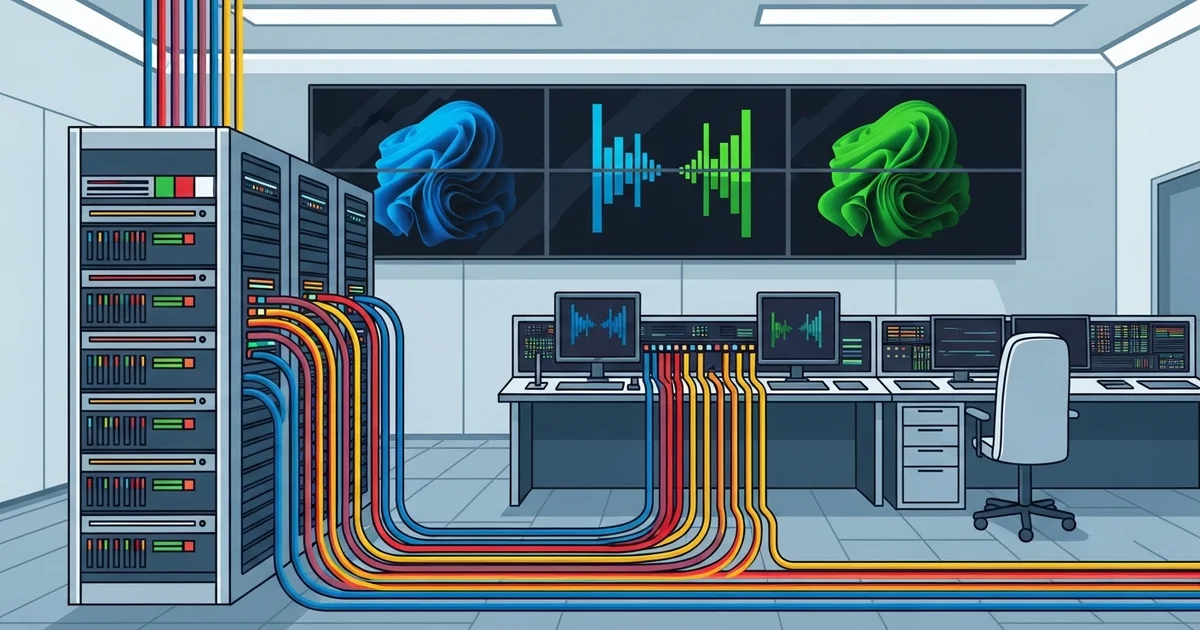
Unified KVM Video Wall Appliance Explained
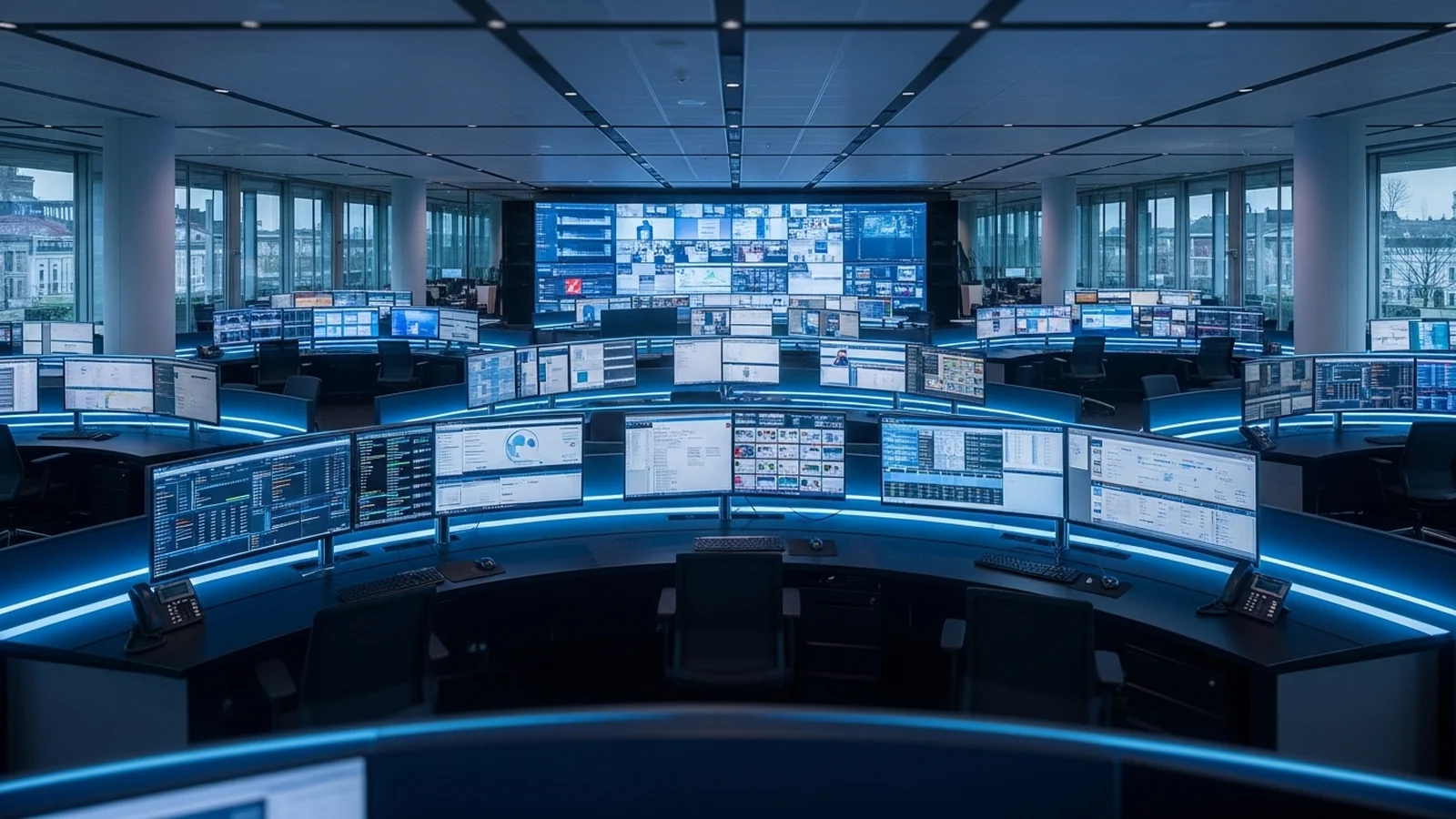
Control room operators have traditionally juggled multiple systems to manage their workflows. Running separate KVM matrices and video wall processors meant dealing with duplicate management tools, redundant cabling, and complex integrations. VisionVS eliminates this inefficiency by consolidating both functions into a single appliance.
VisionVS captures KVM sources once and distributes them intelligently across your infrastructure. It simultaneously sends G&D bluedec streams to your ControlCenter KVM matrix for operator control while driving your video wall displays from a unified platform. This integrated approach reduces deployment complexity, simplifies management, and delivers cost savings through hardware consolidation.
A control room used to need two systems. A KVM matrix to switch operators between machines. A separate processor to drive the video wall. Two appliances, two management tools, two sets of cabling. G&D and VuWall now ship one appliance that does both.
VisionVS captures a KVM source once. From that single capture it sends a G&D bluedec stream to the ControlCenter KVM matrix for operator control, and at the same time a VuWall stream to a PAK processor for the video wall. One encode, two destinations.
A unified KVM and video wall appliance captures a computer source a single time and encodes it for two purposes at once: live operator control through a KVM matrix, and display on a shared video wall through a video wall processor. The traditional approach uses separate hardware for each path. A unified appliance such as VisionVS combines both, reducing the encoder count, the cabling, and the number of systems to configure in a control room.
What VisionVS does
VisionVS is a dual-encoding appliance. It pairs G&D’s Vision KVM and KVM-over-IP line with VuWall’s VuStream IP encoding in a single unit.
- [1]One dual-encoding appliance: KVM control and video wall visualisation from a single capture
- [2]DisplayPort 1.1 input up to 4096×2160 at 30Hz or 2560×1600 at 60Hz, HDMI 1.4 loop-through output
- [3]G&D bluedec stream to the ControlCenter matrix, simultaneous VuWall stream to a PAK processor
- [4]Pixel-perfect, near zero-latency primary stream plus a second low-bandwidth stream for remote access
- [5]Fiber or copper, managed centrally through VuWall TRx alongside G&D matrix switches
VuWall TRx now manages G&D matrix switches including ControlCenter-Compact, ControlCenter-Digital, ControlCenter-IP and ControlCenter-IP-XS. One interface drives the wall and the KVM matrix, rather than two separate tools side by side.
When a KVM should not be your video wall controller
The case for a unified appliance is strongest in smaller rooms. A security operations room with a handful of sources and a two-by-two wall does not need a separate video wall processor. Removing it removes a box, its cabling, and a second management tool.
The case weakens as scale rises. A national operations centre running dozens of live feeds onto a large canvas, with continuous uptime requirements and complex layouts, still warrants a dedicated video wall platform built for that load. VisionVS does not erase that boundary. It moves it, so more rooms fall on the side where one appliance is enough.
The honest answer to the r/VIDEOENGINEERING question is therefore not yes or no. It is a question of source count, canvas size, and uptime. Below a certain scale, a KVM that also drives the wall is the simpler build. Above it, the dedicated processor still earns its rack space.
Frequently asked questions
VisionVS is a dual-encoding appliance jointly developed by G&D and VuWall. It captures a KVM source once and produces two streams from that single capture: a G&D bluedec stream sent to a G&D ControlCenter KVM matrix for operator control, and a VuWall stream sent to a VuWall PAK processor for video wall visualisation. One appliance replaces the separate KVM encoder and video wall capture hardware a control room would otherwise need.
In smaller control rooms, yes. A control room with a handful of sources and a modest display wall can use a unified KVM and video wall appliance such as VisionVS instead of buying and maintaining a separate video wall processor. In large operations centres with dozens of simultaneous feeds, a large compositing canvas, and continuous uptime requirements, a dedicated video wall platform is still the right choice. The unified appliance does not remove that boundary, it shifts it so more rooms fall on the side where one appliance is sufficient.
VisionVS has a DisplayPort 1.1 input supporting up to 2560×1600 at 60Hz or 4096×2160 at 30Hz, and a loop-through HDMI 1.4 output at the same resolutions. It supports both fiber and copper connections. The appliance delivers a pixel-perfect, near zero-latency primary stream and a second low-bandwidth stream suitable for remote access.
G&D (Guntermann & Drunck) and VuWall came under common ownership in 2025. G&D supplies high-performance KVM and KVM-over-IP systems. VuWall supplies video wall processing and centralised control room management. The two companies developed VisionVS jointly so that a single source can stream to a G&D KVM matrix and a VuWall video wall without a separate translation layer.
TRx is VuWall’s centralised video wall and control room management platform. Recent TRx releases support G&D matrix switches including ControlCenter-Compact, ControlCenter-Digital, ControlCenter-IP and ControlCenter-IP-XS. This allows an operator to manage both the video wall and the KVM matrix from one interface rather than switching between two separate management tools.
Smaller security operations rooms, manufacturing and process control rooms, transport and traffic management rooms, and broadcast monitoring positions benefit most. These environments often run a limited number of sources onto a single wall and gain the most from removing a dedicated processor, its cabling, and its separate management tool. Larger national operations centres with very high source counts typically still warrant a dedicated video wall platform.
Enova Technologies is an authorised G&D and VuWall partner in Singapore. Contact us to scope a unified KVM and video wall build for your control room.
Ask us about VisionVS
Published by
eNOVA Technologies is Singapore's specialist distributor for data centre IT management solutions, representing Adder, Guntermann & Drunck, Raritan, Sunbird, ZPE Systems, and VuWall across Singapore and Southeast Asia. Our technical content is produced with AI assistance and reviewed by our in-house team before publication.
This article was produced with AI assistance and reviewed by the eNOVA Technologies team. All technical claims are verified against manufacturer documentation.