




Data Centre Week: 18 September 2026 — What Operators Need to Know

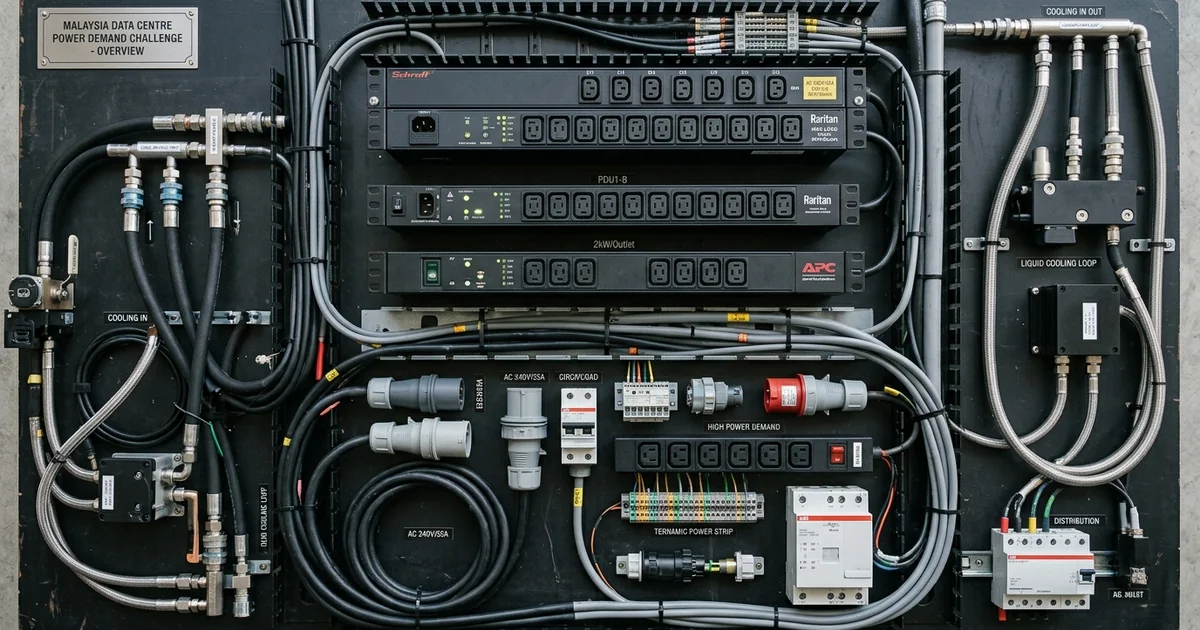
This week in APAC data centres
- Malaysia’s data centres consumed 9.28% of national electricity in 2026, per Energy Regulatory Insights forum speakers.
- Johor Bahru’s data centre vacancy dropped to 0.7% in H1 2026, second only globally, per Cushman & Wakefield’s Andrew Green.
- Singapore’s data centre market is forecast to grow to USD 5.11 billion by 2031 at a 7.83% CAGR, according to Arizton.
- Bitdeer is adding 65.1MW of AI capacity in Johor, targeting 350MW total by early 2028, per company announcement.
Asia Pacific’s data centre market is caught between explosive capacity demand and the infrastructure constraints that threaten to choke it: Malaysia’s grid is buckling under hyperscale loads whilst Seoul and Johor Bahru have virtually no vacancy, forcing operators to balance aggressive expansion targets with a new mandate for resource efficiency and grid flexibility. This week’s convergence of capacity crunches, policy pivots and massive investment commits signals that APAC’s data centre game has shifted from pure growth to intelligent, sustainable scaling.
Why is Malaysia’s grid struggling to keep up with data centres?
Eco-Business
Data centres now draw 9.28% of Malaysia’s total electricity, and TNB and Grid System Operator engineers told the Energy Regulatory Insights 2026 forum that flat, always-on hyperscale loads plus a 40% renewables target by 2035 demand a more flexible, digitally visible grid.
What this means for your operations: If the utility says it cannot manage what it cannot see, the same applies inside your data hall. Metered rack PDUs and DCIM that report real-time load per circuit give Johor and Singapore operators the demand data they will increasingly be asked to share with grid operators.
How tight is APAC data centre capacity when Seoul sits at 1.1% vacancy?
Korea JoongAng Daily
Cushman & Wakefield’s Andrew Green said Seoul’s vacancy fell to 1.1% in H1 2026, second only to Johor Bahru at 0.7%, with Seoul operating 663MW against Tokyo’s 1,397MW and Singapore’s 1,068MW.
What this means for your operations: With no spare halls to lease, the only capacity most Singapore operators can add this year is inside racks they already own. Accurate per-outlet power monitoring shows how much stranded capacity is hiding behind conservative circuit budgets.
How big will Singapore’s data centre market be by 2031?
Arizton via GlobeNewswire
Arizton forecasts Singapore’s data centre market growing from USD 3.25 billion in 2025 to USD 5.11 billion by 2031 (7.83% CAGR), across 44 operational colocation facilities, with industrial electricity at USD 0.21 to 0.24 per kWh.
What this means for your operations: At 21 to 24 US cents per kWh, every wasted watt in Singapore costs roughly double what it does in Johor. That price gap is why intelligent PDUs and DCIM pay back faster here than almost anywhere else in APAC.
What does Malaysia’s next phase of data centre policy mean for operators?
MIDA
At Data Centre Nexus 2026, MIDA set four priorities for the sector: AI-driven infrastructure, resource-efficient operations covering energy and water, local supply chain spillovers, and wider digital access, with Minister Tengku Zafrul saying investment attraction was only the first step.
What this means for your operations: Malaysia is shifting from approving sites to scrutinising how they run. Operators with Johor facilities should expect energy and water reporting to tighten, which means monitoring that already produces auditable PUE and consumption data.
Why is Bitdeer adding another 65.1MW of AI capacity in Johor?
TheEnergyMag
Singapore-based Bitdeer secured a 65.1MW A202 facility in Johor under a 10-year services agreement, due to energise in Q3 2027, taking its secured AI cloud capacity to 206.5MW of a 350MW target by early 2028.
What this means for your operations: GPU halls built before customers sign are being commissioned fast and remotely. Out-of-band serial and IP KVM access lets a small Singapore team bring up and troubleshoot Johor racks without a border crossing each time a node hangs.
APAC data centre operators scaling into constrained markets must combine aggressive capacity deployment with surgical control over power distribution, thermal management, and real-time infrastructure visibility. eNOVA’s integrated stack of Raritan PDUs, Adder and G&D KVM switching, ZPE out-of-band management, Sunbird DCIM and VuWall visualisation equips engineering teams to maximise density, cut operational risk and deliver grid-friendly load flexibility across hyperscale and edge deployments; contact our Singapore team at https://enova.sg/contact/ to discuss your 2026-2027 infrastructure roadmap.
Frequently Asked Questions
Why are Malaysia’s power grid operators worried about data centre growth?
Data centres now draw 9.28% of Malaysia’s total electricity, and the combination of flat, always-on hyperscale loads with Malaysia’s 40% renewable energy target by 2035 requires a fundamentally more flexible and digitally visible grid infrastructure. TNB and Grid System Operator engineers have flagged that legacy grid visibility and inflexible demand-response cannot absorb the next phase of facility growth without investment in digital monitoring and real-time load balancing.
What is MIDA’s new four-point policy framework for Malaysian data centres?
Malaysia’s Investment Development Authority set four priorities at Data Centre Nexus 2026: AI-driven infrastructure capabilities, resource-efficient operations covering both energy and water consumption, development of local supply chain spillovers, and wider digital access across the nation. Minister Tengku Zafrul emphasised that investment attraction was only the first step; the sector must now deliver sustainable, economy-wide impact.
How does Singapore’s industrial electricity cost compare to typical data centre operating margins?
Singapore’s industrial electricity rates range from USD 0.21 to 0.24 per kWh according to Arizton’s 2026 forecast, making power one of the largest variable costs in colocation operations. At these tariffs, a 500kW facility consuming 4,380MWh annually faces electricity bills of approximately USD 920,000 to USD 1,050,000, underscoring why power efficiency, monitoring and real-time visibility tools are critical to margin protection.
Which APAC cities have the tightest data centre vacancy, and what does that mean for new operators?
Johor Bahru leads with 0.7% vacancy and Seoul follows at 1.1%, according to Cushum & Wakefield’s H1 2026 analysis, compared to Singapore’s higher availability at 1,068MW operational capacity. New entrants and expansion-phase operators face severe space constraints in these markets, making power density, cooling efficiency and real-time infrastructure intelligence essential differentiators for securing and retaining customer workloads.
What is driving Bitdeer’s 10-year commitment to 350MW AI capacity in Johor by 2028?
Bitdeer’s phased buildout, including a newly secured 65.1MW A202 facility due to energise in Q3 2027, reflects strong enterprise and AI workload demand across Southeast Asia, where both Malaysia’s policy incentives and proximity to Singapore’s talent and customer base create a compelling economics case. The 10-year term signals confidence that AI cloud capacity will remain a structurally growing revenue stream through the late 2030s.

Published by
eNOVA Technologies is Singapore's specialist distributor for data centre IT management solutions, representing Adder, Guntermann & Drunck, Raritan, Sunbird, ZPE Systems, and VuWall across Singapore and Southeast Asia. Our technical content is produced with AI assistance and reviewed by our in-house team before publication.
This article was produced with AI assistance and reviewed by the eNOVA Technologies team. All technical claims are verified against manufacturer documentation.