



Data Centre Week: 2 October 2026 — What Operators Need to Know

This week in APAC data centres
- Johnson Controls’ modelling suggests NUS Testbed 2.0 could reduce non-IT energy by 50% and unlock 97 MW of extra AI capacity in Singapore (eNOVA News).
- Indonesia’s West Java AI campus construction is paused pending environmental permits, weeks after BDx’s groundbreaking on a 640 MW campus (eNOVA News).
- Globe Telecom’s STT GDC Philippines venture will grow from 35 MW to 124 MW over three years as part of a US$1 billion investment plan (eNOVA News).
- Victoria’s new data centre rules now require a 150-metre buffer from homes and renewable energy supply, triggering community resistance to power infrastructure upgrades (eNOVA News).
Southeast Asia’s data centre boom is accelerating this week across three fronts: environmental innovation in Singapore, regulatory hurdles in Indonesia, and aggressive capacity expansion in the Philippines, all underscoring the region’s critical need for resilient power infrastructure and operational visibility. Meanwhile, Victoria’s pushback against unplanned grid upgrades and Legrand’s forecast of €3 billion in global data centre sales highlight how permitting, sustainability mandates, and infrastructure monitoring are becoming competitive differentiators in the hyperscale era.
What is Singapore’s Sustainable Tropical Data Centre Testbed 2.0 testing for AI workloads?
DataCenterNews Asia
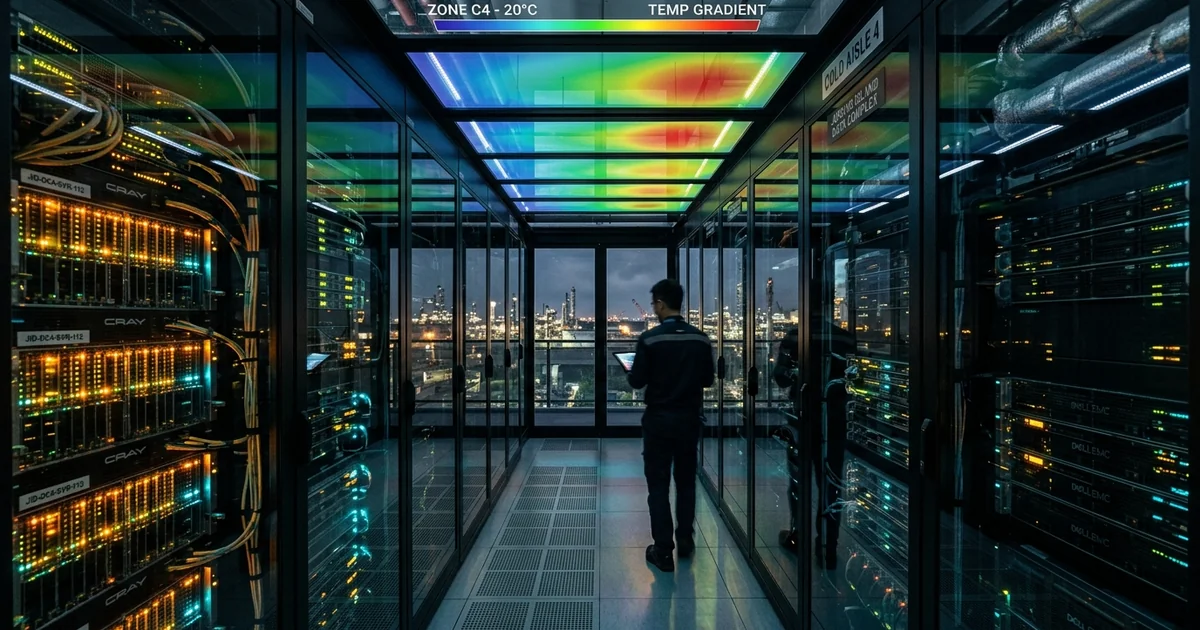
Johnson Controls has joined the NUS-hosted Sustainable Tropical Data Centre Testbed 2.0 on Jurong Island with JTC; its modelling (not live results) suggests up to 50% less non-IT energy and 97 MW of extra AI capacity from existing power.
What this means for your operations: If the gains hold, Singapore’s ‘new’ AI capacity will come from making existing halls efficient, not new power. Finding that headroom needs rack-level metering, so intelligent PDUs and DCIM become the tools that unlock it.
Why has Indonesia paused construction of BDx’s 640 MW West Java AI campus?
W.Media
West Java Governor Dedi Mulyadi has halted work at BDx’s Jatiluhur campus (Building 1 is 120 MW of IT load) until permits and an environmental impact assessment are issued, weeks after groundbreaking.
What this means for your operations: Overflow plans outside Singapore should allow for permit and water reviews. If a site starts late, IP KVM and out-of-band access let a small team bring it up fast once approvals land.
How big is Globe Telecom’s US$1 billion AI and data centre push in the Philippines?
W.Media
Globe plans at least US$1 billion of digital investment in 2027, with its STT GDC Philippines joint venture growing from 35 MW at end-2026 to 124 MW over three years, against a national base of about 140 MW live.
What this means for your operations: Philippine data-residency rules will push regional operators to run Manila sites alongside Singapore. One team can run several countries well with standard power metering and out-of-band access at every site.
What do Victoria’s new data centre rules mean for power infrastructure near homes?
ABC News
Melbourne residents are protesting 15-metre, 66 kV power poles feeding NextDC’s West Footscray expansion, days after Victoria announced a 150-metre buffer from homes and a renewable supply requirement for new sites.
What this means for your operations: Getting power into a site is now a community issue as much as an engineering one across APAC. When each new megawatt is hard to win, tracking existing power at outlet level is the cheaper path.
Why is Legrand forecasting more than €3 billion in data centre sales for 2026?
DataCenterNews Asia
Legrand, parent of Raritan, says data centres now make up 32% of group sales, with critical power at 35% of that business and infrastructure monitoring and control at 25%, and it named Malaysia as a regional growth example.
What this means for your operations: A quarter of that spend going to monitoring and control shows visibility is now core infrastructure. For APAC teams, it signals continued local supply and support for intelligent PDU ranges.
As operators scale AI workloads across tropical climates, manage complex permitting timelines, and balance renewable mandates with power reliability, visibility into power distribution, remote console access, and real-time DCIM analytics are no longer optional. Contact eNOVA today to explore how Raritan PDUs, Adder KVM, ZPE out-of-band management, and Sunbird DCIM can simplify your Southeast Asian data centre operations. eNOVA supplies the power, KVM, out-of-band and DCIM layer behind these builds, from Raritan intelligent PDUs and Sunbird DCIM to Adder and G&D KVM and ZPE out-of-band management. Talk to our team about your next deployment.
Frequently Asked Questions
What is a sustainable tropical data centre testbed and why does Singapore have one?
A sustainable tropical data centre testbed is a controlled research facility designed to test energy-efficient cooling and power delivery techniques in hot, humid climates. The NUS-hosted Sustainable Tropical Data Centre Testbed 2.0 on Jurong Island partners with Johnson Controls and JTC to model novel approaches that can reduce non-IT energy consumption by up to 50%, helping operators replicate techniques across Southeast Asia’s expanding hyperscale footprint.
Why would a data centre regulator pause construction after groundbreaking?
Regulators pause construction when critical permits or environmental impact assessments (EIAs) were not fully approved before work began, as happened with BDx’s West Java campus. Indonesia’s West Java Governor halted Building 1 (120 MW IT load) to ensure compliance, reflecting tightening governance around large-scale energy infrastructure in the region.
What is the difference between IT load and total data centre capacity?
IT load refers only to the power consumed by compute, storage, and networking equipment, while total capacity includes IT load plus cooling, power distribution, and auxiliary systems. BDx’s 640 MW West Java campus has 120 MW of IT load in Building 1, meaning cooling and infrastructure would consume a multiple of that in total facility power.
Why are renewable energy requirements now standard for new data centre approvals in Victoria?
Victoria’s new rules mandate a 150-metre buffer from homes and renewable supply requirements to reduce grid strain, emissions, and community opposition to data centre expansion. NextDC’s West Footscray expansion illustrates this tension; neighbours are protesting new 66 kV power poles needed to feed the site, forcing operators to factor permitting and grid infrastructure into project timelines.
What share of Legrand’s revenue now comes from data centre critical power?
Data centres account for 32% of Legrand’s group sales, and critical power infrastructure (Raritan PDUs, distribution, and UPS integration) makes up 35% of that data centre revenue. This reflects the €3 billion-plus data centre market forecast for 2026 and the strategic importance of power monitoring and control solutions across APAC, where Malaysia is highlighted as a regional growth driver.

Published by
eNOVA Technologies is Singapore's specialist distributor for data centre IT management solutions, representing Adder, Guntermann & Drunck, Raritan, Sunbird, ZPE Systems, and VuWall across Singapore and Southeast Asia. Our technical content is produced with AI assistance and reviewed by our in-house team before publication.
This article was produced with AI assistance and reviewed by the eNOVA Technologies team. All technical claims are verified against manufacturer documentation.