


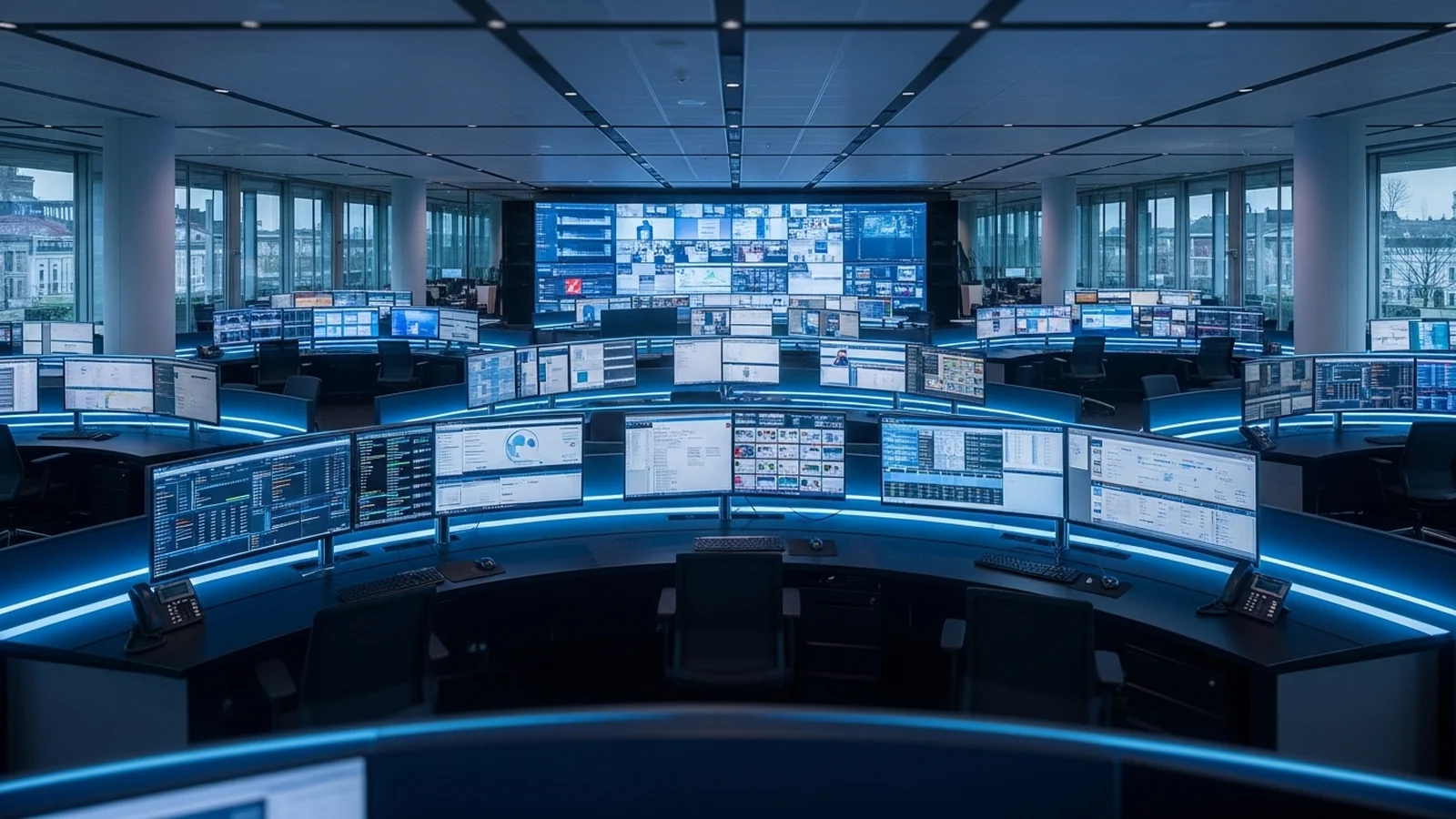
How Has Technology Revolutionized the Control Room?

Cast your mind back a number of years, and the world’s industrial landscape looked very different to the current day. Modern technology has carved the way for smart devices – which in turn have impacted the ways in which we live and operate. Computers are faster, higher-powered, and more intelligent than ever before. There is no doubt that this digital transformation has made our lives easier, faster, and better – but it has also forced organizations to adapt and evolve to accommodate an ever-changing technological environment.
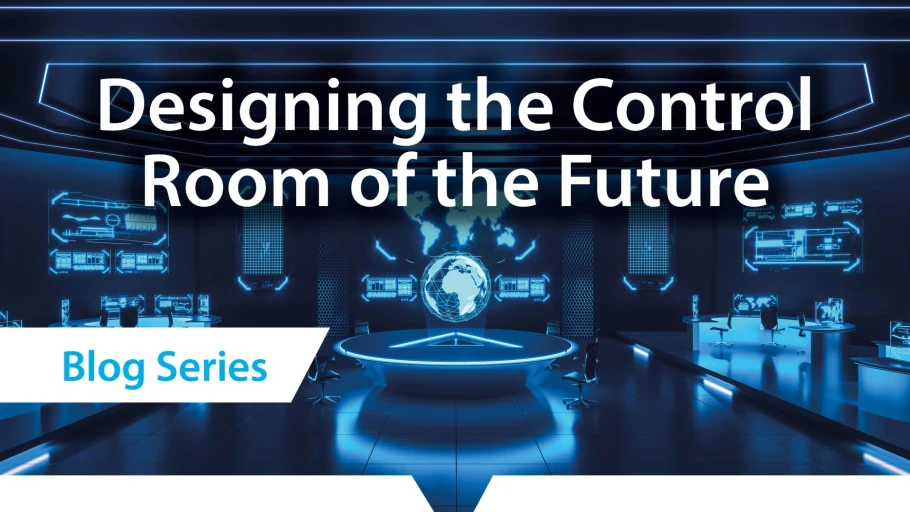
There are perhaps few industries that have been as revolutionized by technology as the control room. These mission-critical spaces have advanced by combining myriad of new innovations to create a more productive and agile environment. An adaptability that applies to both the physical aspect of technology, and the infrastructure upon which it sits.
But how have control rooms been able to seamlessly connect all this new technology and manage the influx of data being generated by faster PCs and more accessible technology? All while still delivering critical real-time access to operators.
Contact us to find out how high performance KVM is supporting control rooms around the world as they navigate through their digital transformation and discover how connectivity solutions can sit at the heart of the control room to connect operators with their critical computers.
Frequently Asked Questions
What is a control room in a data centre and what does it do?
A data centre control room is a mission-critical space where operators monitor and manage infrastructure, systems, and security across the entire facility in real-time. It serves as the central hub for managing power distribution, cooling systems, network connectivity, and emergency response, ensuring continuous uptime and operational efficiency.
How has technology changed control room operations in the last 5 years?
Modern control rooms now leverage smart devices, AI-assisted monitoring, and unified connectivity solutions that consolidate data from multiple sources into single dashboards, replacing legacy siloed systems. This has enabled operators to manage increasingly complex infrastructure with faster response times and better visibility across distributed data centre environments.
What is KVM technology and why is it important for control rooms?
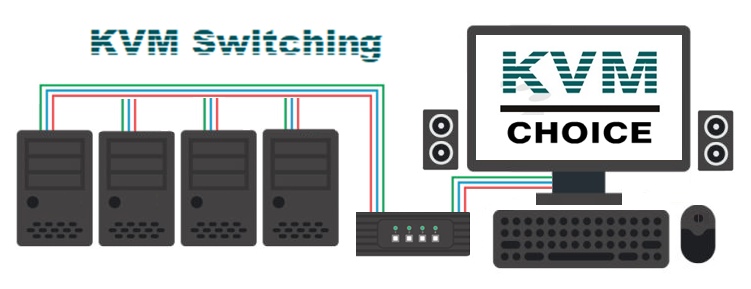
KVM (Keyboard, Video, Mouse) technology allows operators to access and control multiple computers and servers from a single console without physically moving between machines. In control rooms, high-performance KVM solutions enable real-time access to critical systems while supporting the bandwidth demands of modern monitoring applications and reducing physical space requirements.
How do control rooms in Singapore handle the challenges of managing multiple data centres?
Singapore data centre operators increasingly use centralized connectivity solutions and remote KVM technology to manage geographically distributed facilities across the region, reducing the need for on-site staff at each location. This approach is particularly valuable in APAC’s dense urban environments where real estate costs are high and facilities are often spread across multiple islands or countries.
What connectivity solutions should I implement for a modern control room?
Modern control rooms require low-latency, high-bandwidth connectivity solutions that unify disparate systems—such as building management, security, and IT infrastructure—into a single monitoring interface. Key considerations include redundancy, scalability to handle increasing data volumes, and support for both legacy systems and newer IoT devices.
How can control room operators manage the increasing amount of data from smart devices?
Operators can manage data influx through unified dashboards that aggregate information from multiple sources, implement intelligent filtering and alerting systems, and use data analytics to identify critical issues before they impact operations. Proper infrastructure design with adequate bandwidth and processing power ensures real-time responsiveness without overwhelming operators.

Published by
eNOVA Technologies is Singapore's specialist distributor for data centre IT management solutions, representing Adder, Guntermann & Drunck, Raritan, Sunbird, ZPE Systems, and VuWall across Singapore and Southeast Asia. Our technical content is produced with AI assistance and reviewed by our in-house team before publication.
This article was produced with AI assistance and reviewed by the eNOVA Technologies team. All technical claims are verified against manufacturer documentation.